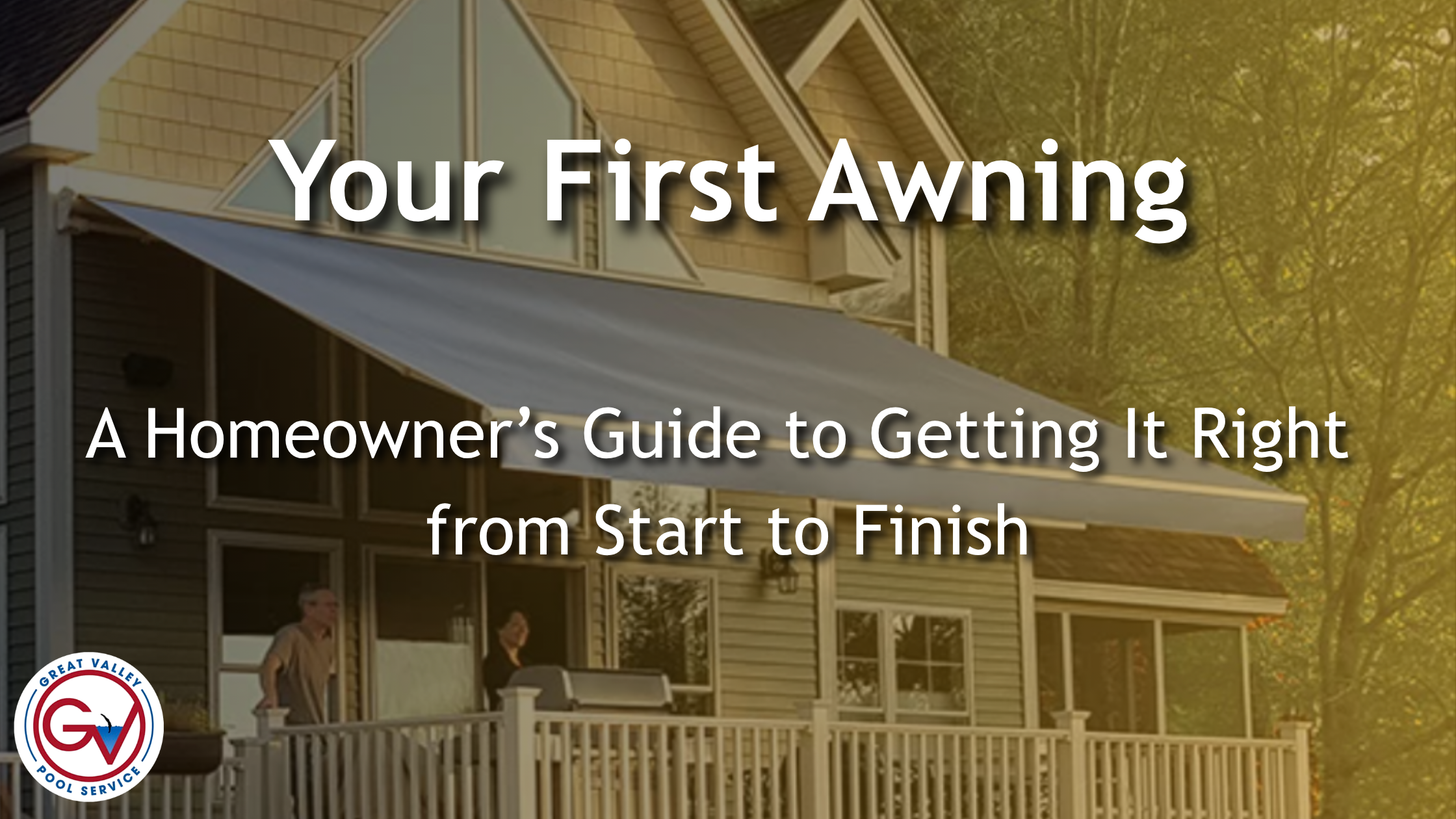
Your First Awning: A Homeowner’s Guide to Getting It Right from Start to Finish
You’ve invested real time and money into creating an outdoor space you can enjoy. A good patio, decent furniture, maybe a grill setup that actually gets used. But if summer heat or afternoon glare is the thing standing between you and more time outside, an awning may be the most straightforward fix available.
The catch is that when it comes to awnings, most homeowners don’t know where to start. You don’t buy one every year. The decisions aren’t obvious from the outside: size, style, fabric, motorization, professional installation. Getting one of them wrong means living with the consequences for a long time. A quality awning, properly chosen and installed, will be part of your home for 15 to 20 years.
This guide walks through the process in order, from the first question you should ask yourself to what happens after the installation crew wraps up. If you’ve been putting off this decision for a season or two, here’s everything you need to move forward confidently.
Step 1: Start With the Space, Not the Product
Before you look at a single product page, walk your property and pay attention to where the sun actually lands and at what times. This matters more than most people expect.
South- and west-facing patios and decks receive the most direct afternoon sun, making them the most common candidates for awning installation. A deck that faces east gets morning sun and natural afternoon shade, so the urgency is lower. A western-facing deck in July, though, can be genuinely unusable from 2pm onward without some kind of coverage.
Once you’ve identified your target area, look at the mounting surface. Wall mounts are the standard for most residential awnings, but roof mounts and other configurations are solid options when wall space is limited or the architecture calls for something different. The structural integrity of the mounting surface matters, and a professional installer will evaluate this before a single hole is drilled.
Wind exposure is worth factoring in as well. Properties on corner lots or elevated sites tend to see more consistent wind, and that affects both product selection and how you’ll operate the system day to day.
Getting this first assessment right means that every decision downstream has a solid foundation.
Step 2: Choose the Right Product for What You’re Actually Trying to Solve
Once you know your space, you can match it to a product type. Great Valley Awning carries several categories of shade solutions, and the differences are meaningful.
Retractable awnings are the most popular choice for residential patios and decks. They extend when you want shade and retract when you prefer open sky, which covers the widest range of situations for most families. A manual retractable awning operates on a hand crank. A motorized version extends and contracts with a remote or a smartphone app, depending on the configuration. For larger awnings especially, motorization tends to pay for itself in how consistently the system gets used and cared for.
Stationary awnings are the right call when the need for shade is consistent rather than occasional. Over a window or entry door, a fixed awning blocks direct sun before it reaches the glass, which reduces heat gain and glare inside the home. For commercial properties, stationary awnings do several things at once: they shelter customers from sun and rain, improve the look of a building’s exterior, and can be customized to incorporate brand colors or signage. Great Valley Awning builds stationary awnings to order, sized to the inch, with over 130 fabric options and a range of frame colors to coordinate with any exterior. Because there’s no mechanical system to manage, the main variables are fit, fabric quality, and installation — and getting those right is where a professional installer earns its keep.
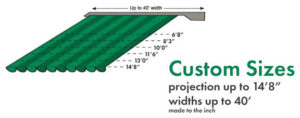
The Sunesta is the flagship retractable in the Great Valley lineup, available in widths up to 40 feet with a projection reach up to 14′ 8″. What sets it apart is the engineering built into the hardware. Smart Fold technology allows the awning to deploy cleanly across both narrow and wide projections. Smart Park keeps the awning arms perfectly aligned as the awning opens and closes. It helps the awning retract smoothly and evenly every time. Smart Pitch lets your installer set the arm angle with precision rather than guesswork. Smart Strong uses four PVC-protected arm cables to keep everything structurally sound over years of regular use. These features exist because retractable awnings experience real mechanical stress over time, and small engineering decisions made upfront determine how the system holds up down the road.
Retractable screens address a different problem. Where a standard awning handles overhead sun, a retractable screen manages insects, sun glare, and wind. For porches or spaces where bugs are the main issue, screens are often the best solution.
Retractable shade structures work well for covering larger areas or areas requiring a freestanding structure: pool decks, detached seating areas, or spaces that sit too far from the house for a standard wall mount. Horizontal shades are a unique and innovative shading solution that are pulled from the side to bring you side shade and privacy. They also act as a light wind screen by blocking the breeze.
Porch enclosures transform your covered porch or patio into a stylish and comfortable 3-season retreat, extending enjoyment of your outdoor space.
And if you’re looking for something more flexible and freestanding, the Funbrella is worth a look.
The right product is the one that solves the actual problem in your specific space. A visit to Great Valley Awning’s Frazer showroom is the most efficient way to sort this out, and the team there will give you a straight answer about what makes sense for your home.
Step 3: Size It Correctly
Sizing is where a lot of homeowners underestimate and end up disappointed. The most common mistake is ordering an awning too narrow for the space, which leaves part of the patio in full sun even when the awning is fully extended.
Because every Sunesta awning is custom-made to the inch, you’re not confined to the limited, one-size-fits-most dimensions common with mass-produced awnings. Width is determined by your available wall span and the area you want to cover. Projection is how far the awning reaches out from the wall when fully deployed.
For a standard patio, coverage that extends a few feet beyond your seating area on each side makes the difference between feeling genuinely shaded and watching the sun inch closer to your chair all afternoon. Your design consultant will walk you through what sizing makes sense for your specific configuration. Refer to our custom size chart here.
Step 4: Pick Your Fabric and Frame Color
This is often the part of the process homeowners enjoy most, and also where it’s easy to spend more time than necessary. Having a simple framework helps.
The Sunesta fabric collection includes over 130 awning options: stripes, solids, and patterns across a wide range of colors. These are solution-dyed acrylic fabrics built for UV resistance, color retention, and resistance to mold and mildew. In Chester County and the Mainline, Delaware County and New Castle County, where humidity and summer heat are both real factors, that long-term performance holds up in ways that cheaper fabrics don’t.
A few practical tips for narrowing the selection: lighter solids are visually versatile and tend to work with a broader range of home exteriors. Stripes add character but work best when they coordinate with the dominant trim color of the house rather than compete with it. Viewing a fabric swatch in actual outdoor light before committing is worthwhile. Colors read differently on a south-facing wall at 2pm than they do inside a showroom.
Frame color is a separate choice. Sunesta offers more frame color options than most manufacturers, white, clay, black and brown among them, so finding a match for your home’s exterior is much more likely than settling for whatever comes closest.
Step 5: Understand What Professional Installation Actually Covers
Installation might feel like a logistical detail, but it’s worth understanding what actually happens during the process.
A retractable awning is a mechanical system mounted at height, calibrated for alignment, and expected to operate reliably for years. The installation crew from Great Valley Awning assesses the mounting surface for structural suitability, sets the mount angle correctly for the awning’s pitch, programs motor limits so the system opens and closes to the right position every time, and confirms everything works before leaving.
Manufacturer warranties on both the product and the fabric are contingent on proper installation. That’s a real condition that matters when something needs service years down the line, not fine print to skim past.
There’s also the practical side: a fully assembled retractable awning is significantly heavier than it looks. Depending on the width and model, managing one safely at height requires the right equipment and more than one set of hands. This is one project where professional help isn’t just convenient — it’s the standard for a reason.
Get a quote and the team will walk you through what installation looks like for your specific setup.